Preserved content from the existing Yee page.
Keeping your business secure is about more than just locks and keys. Modern workplaces need smarter, more flexible, and more efficient ways to protect people, data, and assets. That’s where access control plays a vital role.
But what exactly is access control security, and why is it so essential to modern business operations? In short, it’s a structured method of deciding who can access specific areas, protecting individuals, sensitive resources and confidential data. By putting the right system in place, organisations can reduce risks, meet compliance obligations, and create a safer and more convenient working environment for employees.
If you’re wondering what an access control system is or how an access control system works, this guide will break it down for you, covering the different types, benefits, key components, and best practices—before helping you decide what is the best access control system for your business.
At its most basic, what are access control systems? They are tools and processes designed to regulate entry and usage rights. Instead of relying on a single lock or password, they create layered, customisable permissions that reflect your organisation’s structure and needs.
Common examples include:
By defining who can go where and when, these systems not only improve security but also create accountability, with every action logged and traceable.
To understand how an access control system works, think of it as a series of stages:
By combining these steps, access control systems make it simple for businesses to design restricted offices and areas, and to control who is allowed to enter them.
Building managers and operators often ask: what is the best way to approach the design of a access control system? The answer depends on your operations and security needs.
Here are the most widely used models:
Choosing the right system is about balancing control, convenience, and compliance with your business goals.
The key question isn’t only what is an access control system, but why your business needs one? The benefits go well beyond basic security:
With the right setup, access control supports smoother daily operations and builds confidence among employees and clients alike.
Security isn’t just about protecting assets—it’s also about meeting strict compliance standards. Many organisations must prove that their access is controlled and monitored to stay compliant with industry regulations. For regulated industries such as finance, healthcare, or retail, access control isn’t optional, it’s a necessity.
So, what is access control system security built upon? Its strength lies in its components working together:
A well-designed system brings these functions together seamlessly, giving businesses a secure, transparent, and manageable solution.
When planning or upgrading your system, it’s worth following some best practices to ensure you achieve maximum security and efficiency:
These steps not only secure your business but also ensure long-term value from your investment.
So, what is the best access control system? The truth is, there’s no universal answer. The ideal solution will depend on:
A small office might benefit from a straightforward role-based model with card entry, while a hospital or financial institution may require a more robust mandatory or attribute-based system with advanced auditing.
Understanding what an access control system is and how it works is the first step in protecting your organisation. By evaluating the different types, their benefits, and the regulations that apply to your industry, you can make an informed decision about which system best fits your business needs.
Choosing the right access control solution delivers more than security, it ensures efficiency, regulatory compliance, and peace of mind.
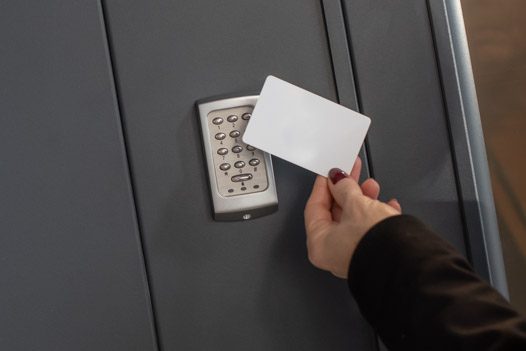
- Key card or fob entry systems.
- Biometric scanners such as fingerprint or facial recognition.
- PIN-based digital locks.
- Identification – The user presents their credentials (card, code or biometric).
- Authentication – The system checks the presented credentials against stored data.
- Authorisation – The systems grants or denies access, based on the permissions.
- Auditing – Every attempt (successful or failed) is logged for accountability and future review.
- Attribute-Based Access Control (ABAC): Access depends on user attributes such as job role, department, or even location.
- Discretionary Access Control (DAC): The resource owner decides who can use it, offering flexibility but sometimes less consistency.
- Mandatory Access Control (MAC): A highly restrictive model where a central authority assigns access rights—common in government or defence.
- Role-Based Access Control (RBAC): One of the most popular options, where permissions are tied to an employee’s role.
- Rule-Based Access Control: Access depends on conditions such as time of day, location, or device being used.
- Physical vs Logical Access Control: Physical systems secure doors, buildings, and spaces, while logical systems manage access to networks, servers, and data.
- Enhanced safety: Keeps unauthorised individuals out of restricted or sensitive areas.
- Risk Reduction: Safeguards intellectual property, financial data, and customer information.
- Efficiency: Automates permissions and reduces reliance on manual checks.
- Scalability: Grows with your workforce and adapts to new premises.
- Auditability: Creates a digital trail to support investigations and compliance..
- Authentication: Confirming identity through something the user knows (PIN), has (card), or is (biometric).
- Authorisation: Determining what resources the authenticated person can access.