Preserved content from the existing Yee page.
Fire safety should always be a priority, especially in the workplace. Fire detection and warning systems are essential to safeguarding your building and its occupants.
However, it is not enough to just simply install the system.
Regular inspections and maintenance of the fire systems are necessary to ensure that it is working correctly and that all components are up to legislative standards.
Knowing how often to inspect your fire detection and warning system is key to maintaining a safe environment. Regular inspections are the only way to ensure that the system is in working order, can detect a fire quickly and effectively, and provide an early warning to those in the building.
Understanding how often fire detection and warning systems should be checked and the importance of regular inspection ensures that your insurer is satisfied that your building and its occupants are protected and prepared for any potential fire emergency.
A fire detection and warning system is an automated system that detects a fire or smoke in the event of a fire. It is designed to alert people and property in commercial buildings, industrial plants, and other facilities. A fire detection and warning system can be a single system that monitors and controls several devices, such as
● Fire alarms ● Sprinkler systems ● Emergency shutoff valves ● Fire suppression systems
Or it can be a combination of various systems.
A system may include the following:
● Smoke detection ● Heat detection ● Fire detection devices
As well as other detection, control, and notification devices.
A fire detection system is designed to detect a fire and usually trigger an audible alarm using a fire alarm system and can be a stand-alone system or combined with other methods, such as a sprinkler system, emergency shutoff valves, gas detection, or a fire suppression system.
Fire alarm systems can be designed to be “monitored” that is; to detect a fire and automatically notify building occupants, firefighters, and emergency personnel of the fire’s location. Fire alarm systems are also used to shut off the flow of fuel and electricity to the fire.
One of the main benefits of regular fire detection and warning system inspections is that they can identify any potential faults in the system which could reduce the system’s coverage and indeed performance in the event of a fire breaking out.
Another advantage of regular inspections is that they help you comply with regulations. For example, fire systems are heavily regulated by The Regulatory Reform (Fire Safety) Order 2005, and there are strict guidelines on how often fire detection and warning systems should be checked, the type of system that must be installed, and the frequency of inspections.
If the responsible person for a premises fails to comply with the fire safety order, he or she could face hefty fines, prison and the business could even be shut down. This may sound daunting, it shouldn’t be, the fire safety order is designed to keep people safe and there are many certified, professional fire alarm companies available to help businesses meet their legal obligations.
During regular inspections, you can also check the accuracy and functionality of your system. For example, you can identify potential issues with the sensors or wiring that might be causing false alarms and flaws in the system’s programming.
Fire systems are important safety systems and should be inspected and tested as part of a regularly routine. It is essential to conduct a routine visual inspection and a weekly test of fire alarm systems in business buildings to ensure that no significant issues have occurred and that it is functioning correctly. In addition, a commercial fire alarm system should be serviced at least once every 6 months by a qualified professional, as recommended in the British Standard BS 5839.
The occupant of the property or the most senior member of the premises is usually the one who can undertake the weekly test of the fire alarm system.
This person can be the responsible person specified in the Fire Safety Order or someone elected by this person, such as a property manager.
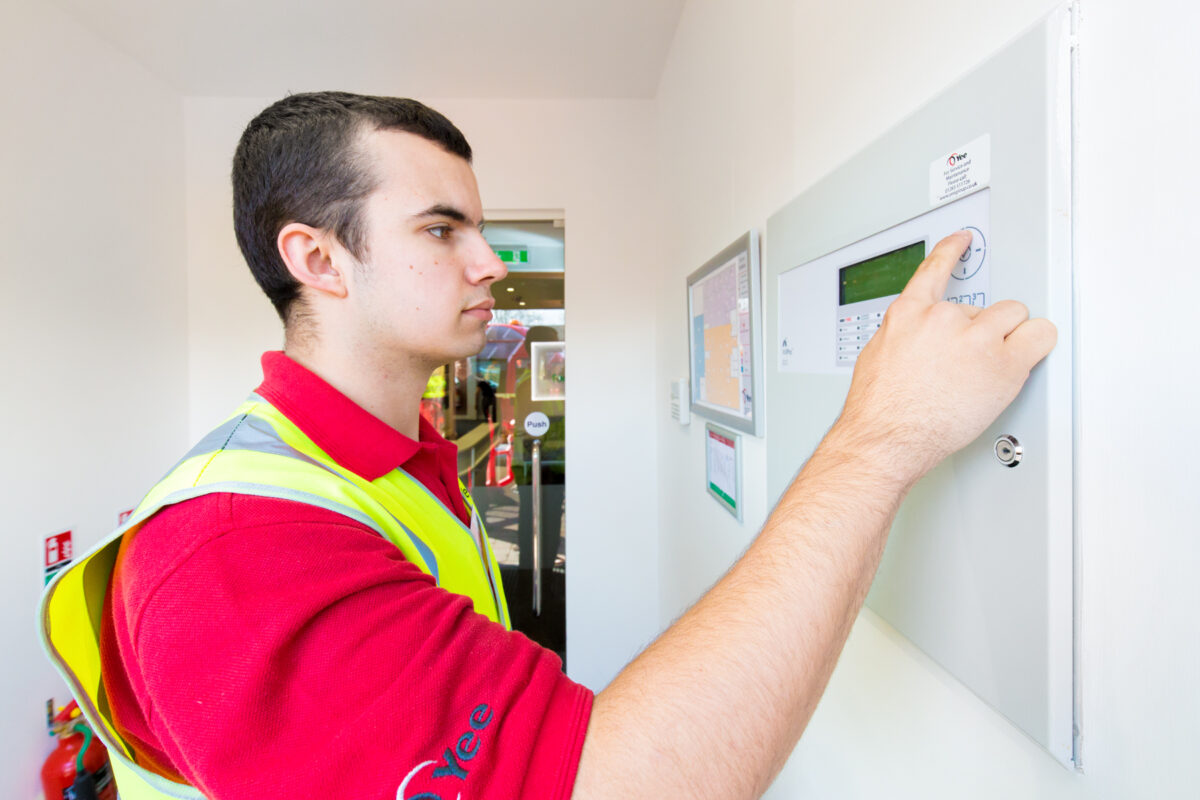
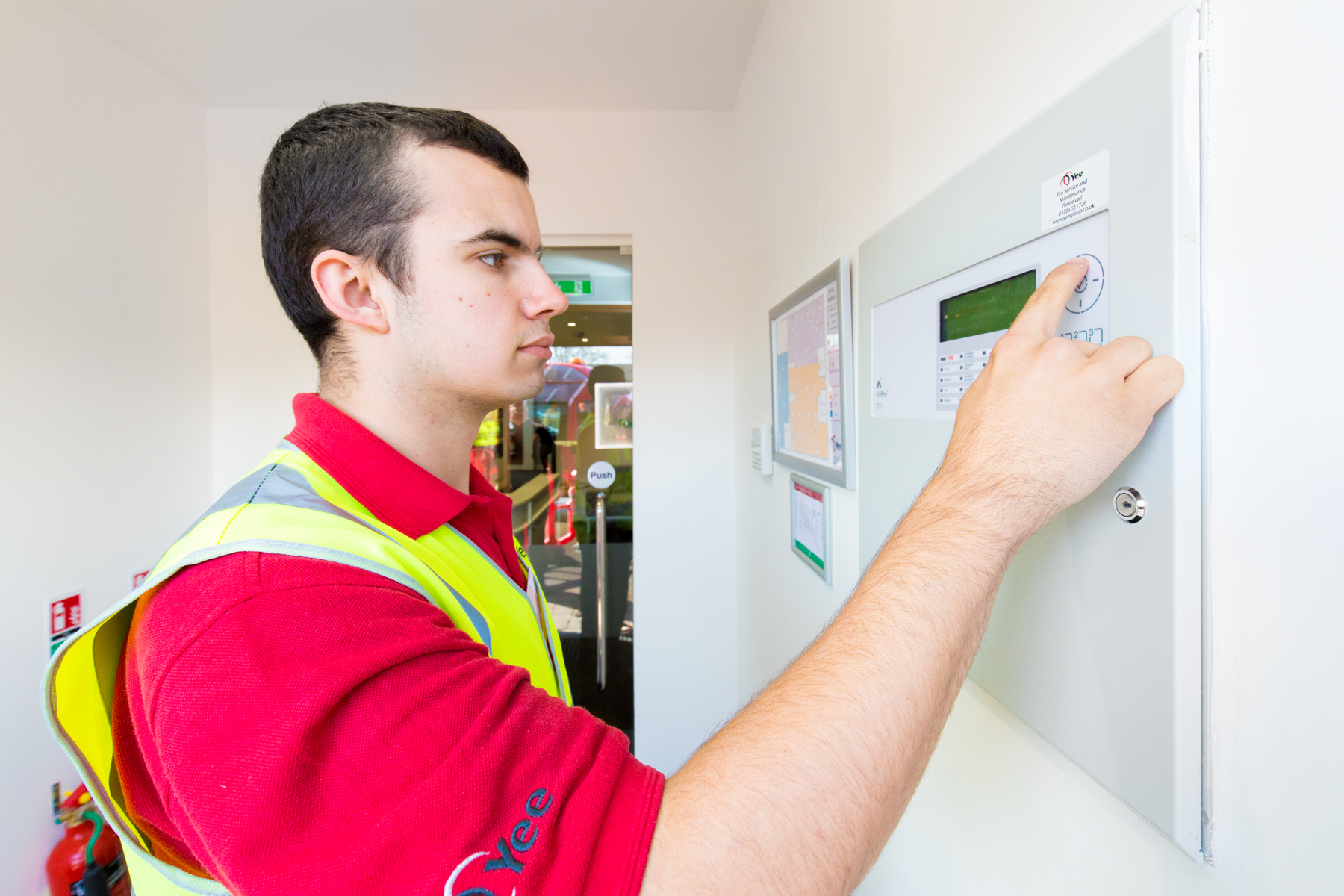
Your Fire Alarm Installer will give easy-to-follow instructions on how to undertake the manual call point test in order to meet the legal requirements.
It doesn’t take any expertise to test a fire alarm, and it’s usually a simple job. Nevertheless, it is important that it is tested correctly and regularly and any faults or queries reported immediately to your professional fire alarm maintenance company.
The test’s outcome should be officially documented every week. This should be entered in the onsite fire alarm log book and kept for the 6 monthly service visit by your fire alarm maintenance company. They will use it to record their service visits.
Testing and inspecting your fire detection and warning systems involves more than just pressing a button. A combination of methods, as highlighted by the Fire Protection Association, helps ensure full compliance with BS 5839 and confirms that all components function correctly:
- Visual checks – Inspect control panels, sounders, and indicators for obvious faults such as loose wiring, damage, or blocked detectors.
- Manual call point testing – Activate one call point each week to confirm the alarm is heard throughout the building. Each test must be logged.
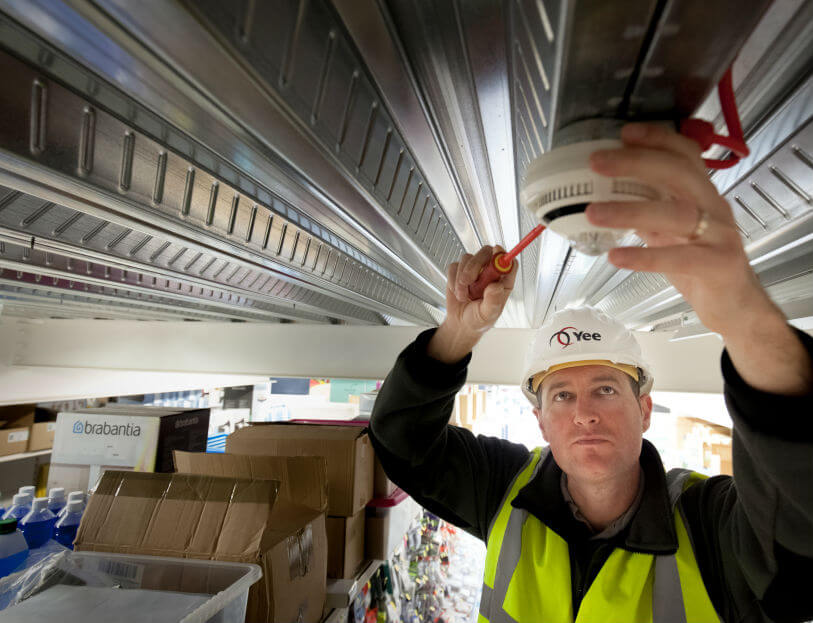
- System servicing and inspection – Every six months, a competent person from a certified fire alarm company should carry out a full service. This includes programming checks, verifying circuits, reviewing false alarm records, and ensuring compliance.
- Weekly tests – The responsible person should perform a manual call point test as set out in BS 5839.
- Monthly checks – In larger or complex buildings, additional checks on batteries, control panels, and detectors are advisable.
- Recording results – All tests must be logged. This not only proves compliance but also helps engineers identify patterns, such as recurring faults.
- Professional servicing – A certified company should still conduct full inspections at least every six months, but routine upkeep in between visits is vital.
- Evacuation drills – These should be organised at least once or twice a year, with all staff participating. They test the audibility of alarms, response times, and adherence to the building’s fire safety policy. Results should be logged in the fire alarm test log book or fire logbook for future reference.
- Simulated fire scenarios – Some businesses choose to work with their fire alarm company to run realistic exercises using the fire alarm control panel and detectors. This type of training helps to identify gaps in procedures and ensures that staff know what to do in an emergency.
- Fire safety training – Drills are an opportunity to reinforce staff awareness of escape routes, assembly points, and safe conduct during a fire. This forms a critical part of ongoing compliance with the fire safety regulations.
- What laws apply to fire detection and warning systems in the UK? The Regulatory Reform (Fire Safety) Order 2005 (RRFSO) requires all workplaces and relevant premises to have adequate fire detection and warning systems, which must be properly maintained.
- Who is responsible for compliance? The responsible person (usually the employer, landlord, building owner, or manager) is legally accountable for installation, maintenance, and inspection. This duty cannot be passed on, even if contractors are hired.
- Is BS 5839 legally required? BS 5839 is not law, but it is the recognised British Standard for fire alarm design, installation, maintenance, and testing. Following it is the accepted way to demonstrate compliance with the RRFSO.
- What records must be kept? All tests, inspections, faults, repairs, and system changes should be logged in a fire alarm logbook. These records may be checked by enforcing authorities.
- What are the penalties for non-compliance? Failing to meet fire safety obligations can lead to fines, prosecution, business closure, or even imprisonment. More importantly, it puts lives and property at risk.
- Do requirements vary by premises? Yes. The RRFSO requires systems to be “appropriate” for the size, use, and occupancy of the building. A fire risk assessment determines what’s needed in each case.
- How often should inspections take place? The law requires systems to be kept in working order. BS 5839 recommends at least two professional inspections per year, plus regular in-house checks as identified in your fire risk assessment.